
Before you mix baking soda, salt and water for a burnt spot in the oven, look up the cleaning instructions for your model. The same paste that can help lift a spill on some oven interiors can be the wrong choice for a liner that calls for a nonabrasive cleaner.
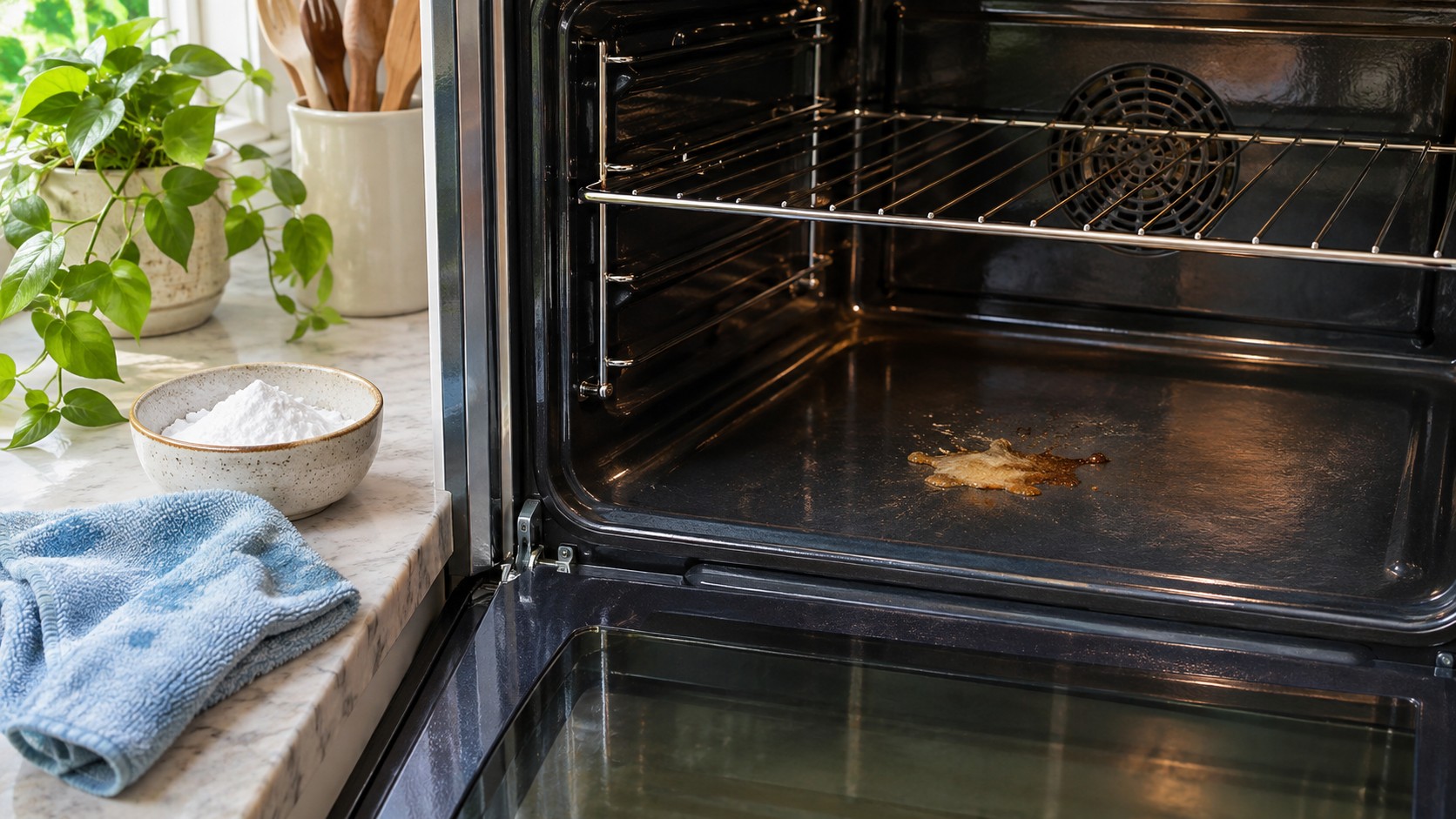
Find out what kind of oven liner you have
Look up the model number and find the section on cleaning the oven interior. A manual may give separate directions for the cavity, door glass, racks and gasket. If your model has a steam-clean or self-clean setting, read those directions before using it, including whether to take out the racks.
GE Appliances’ instructions for hand-cleaning a self-clean oven, for example, call for a nonabrasive cleaner on stubborn marks. That is a reason to check the manual before trying a gritty paste on a liner.
Use the paste on the spill if the manual allows it
For a surface that permits this kind of cleaning, Oregon Metro’s oven-cleaning recipe uses equal parts baking soda and salt with enough water to form a paste. You can start with a tablespoon of each for a small spot.
Turn off the oven and let it cool. Apply a small amount to the affected area, away from heating elements and wiring. Let it sit for five minutes, then lift it with a soft damp cloth. Use a fresh damp cloth to remove the residue, then wipe the surface dry. Keep the paste away from the door seal and any openings.
Stop if the mark needs more force
If the residue stays put, check which cleaner or cycle the manufacturer recommends. A harder scrub can scratch the interior. For jobs outside the oven, see where baking soda fits into a home cleaning routine.