
Close the garage door and look at both bottom corners from inside. If you can see daylight at the jamb, take a closer look at the seal. Then follow the wall toward the house and check where pipes or cables pass through it. The CDC says mice can fit through an opening about a quarter inch wide, roughly the width of a pencil.
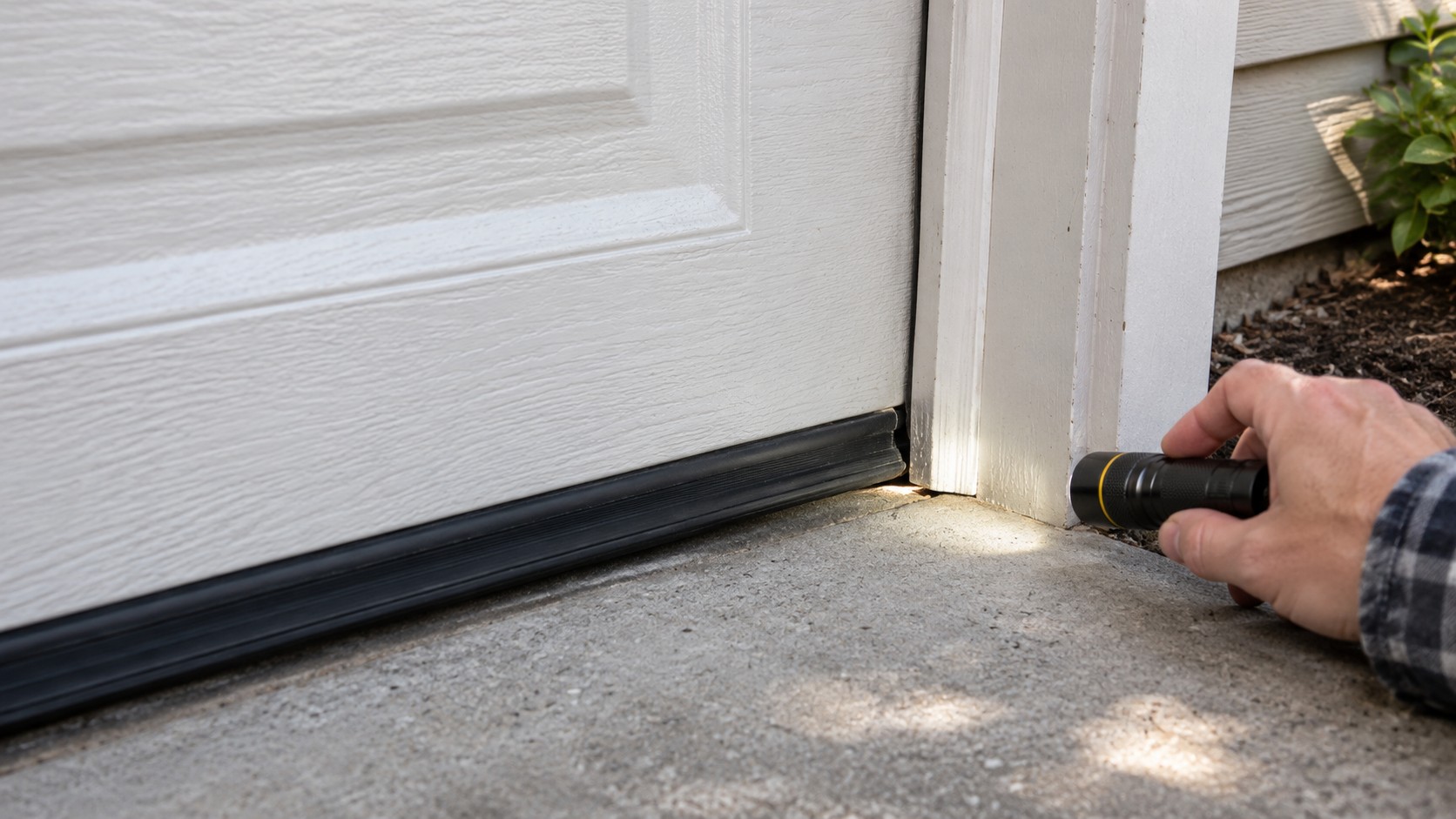
Trace a route from outside to the kitchen
Start at the garage threshold. Inspect the bottom seal and the corners where it meets the side trim. Check the door from an attached garage into the house, too. A worn sweep or a threshold gap can leave a route into the living space.
Walk the exterior at ground level. Look at the holes around water lines, cables and other utilities. Inside, use a flashlight under the kitchen sink and around the washing machine connections. Check the back corners of cabinets and where baseboards meet the floor. Take a photo of each gap so you can find it again with the right materials.
Match the repair to the opening
The CDC recommends steel wool held in place with caulk for small holes and materials such as hardware cloth or sheet metal for larger openings. A worn door seal calls for a replacement that fits the door. Keep dryer vents, combustion air openings and other working vents clear. Ask a qualified technician about gaps around those parts if you’re unsure how to close them.
Handle droppings before moving boxes or sweeping
If you find droppings, leave the vacuum and broom where they are. The CDC’s rodent cleanup guide calls for gloves and wetting droppings with disinfectant before wiping them up. Check food packages for damage and move intact dry goods and pet food into containers with tight lids. That includes backup pantry supplies you might have stored in the garage.