
If the first pass with your rake brings up a row of stones, stop and test a patch near the edge of the path. Dry needles that sit on top of gravel can slide off with a light pass. Wet mats call for a different approach.
Pick a spot to catch the needles
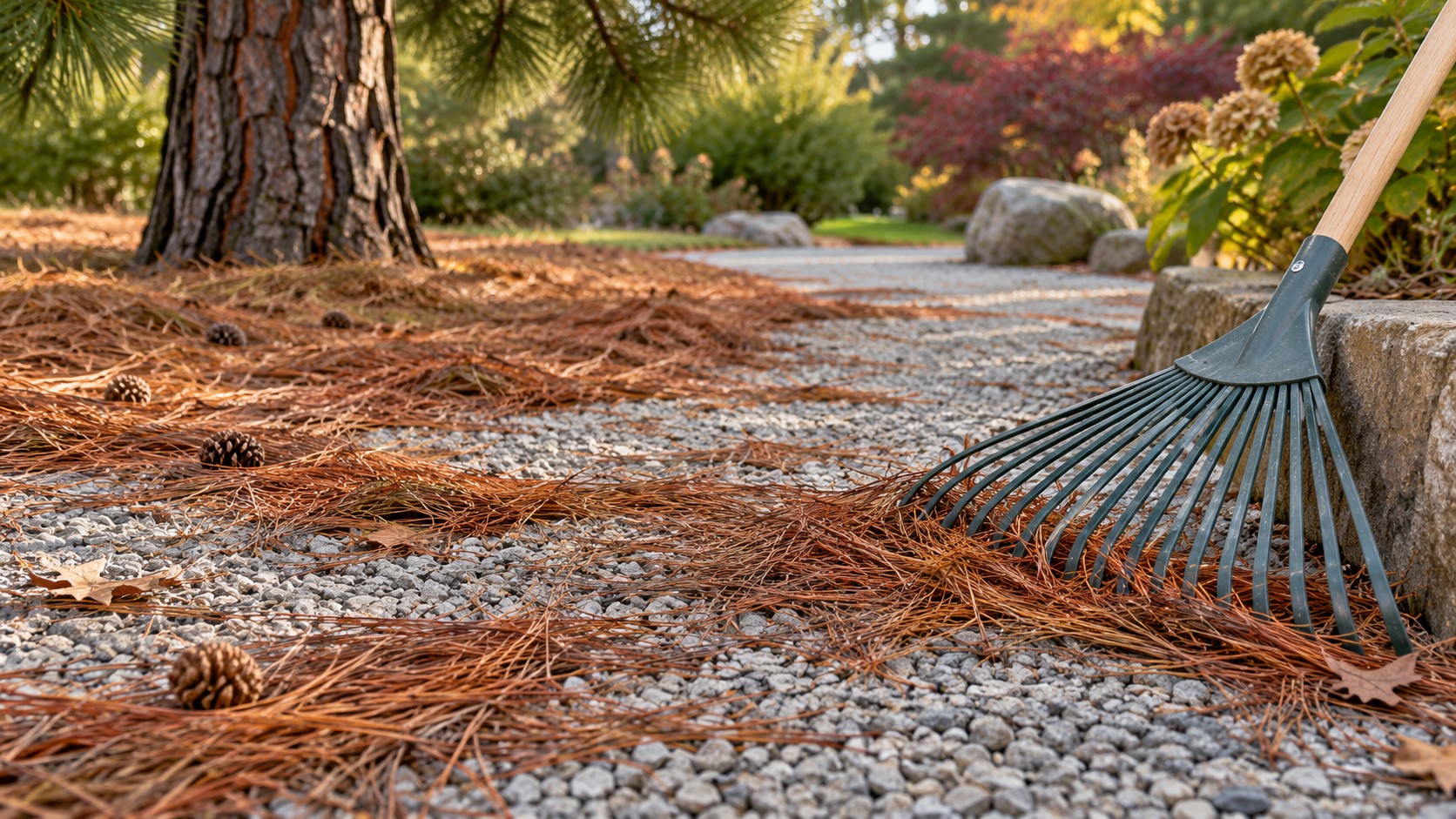
Lay a tarp beside the path, or choose a section of pavement you can sweep. Start near that edge and work in short sections. Pull dry needles across the top of the gravel with a flexible leaf rake. Use shallow strokes and keep the tines from digging in. If the rake leaves furrows, lift the handle or ease the pressure until the tines skim the surface.
For a short path, a hand broom and dustpan can clear needles that bunch up at the edge. Pick up any clumps that pull stones with them and shake the loose gravel back over the path.
Let wet needles dry when you can
After rain, clear the strip people walk on first. Lift the thickest mats by hand with gloves. Give the scattered needles time to dry before you rake them. On fine gravel, use hand tools where stones lift along with the debris.
Use a blower on a test patch first
If your blower’s manual permits use on gravel, put on eye protection, keep people and pets away from the work area, and start at the lowest speed. Aim across the path toward the collection spot. Stop if pebbles move or dust clouds the area. STIHL’s blower guidance recommends using the lowest throttle that gets the job done.
If you have a garden bed that needs mulch, keep the clean needles apart from the pile that contains stones. University of New Hampshire Extension says pine needles can serve as mulch without making garden soil more acidic to a meaningful degree. If you’re reworking the edge of the path, our garden fence ideas cover ways to separate paths and beds.