
Wash fresh broccoli under cool, running water, turning the head so water reaches around the florets and along the stem. You do not need a vinegar or baking soda bath as a routine preparation step, and washing should not be treated as a way to sterilize the vegetable.
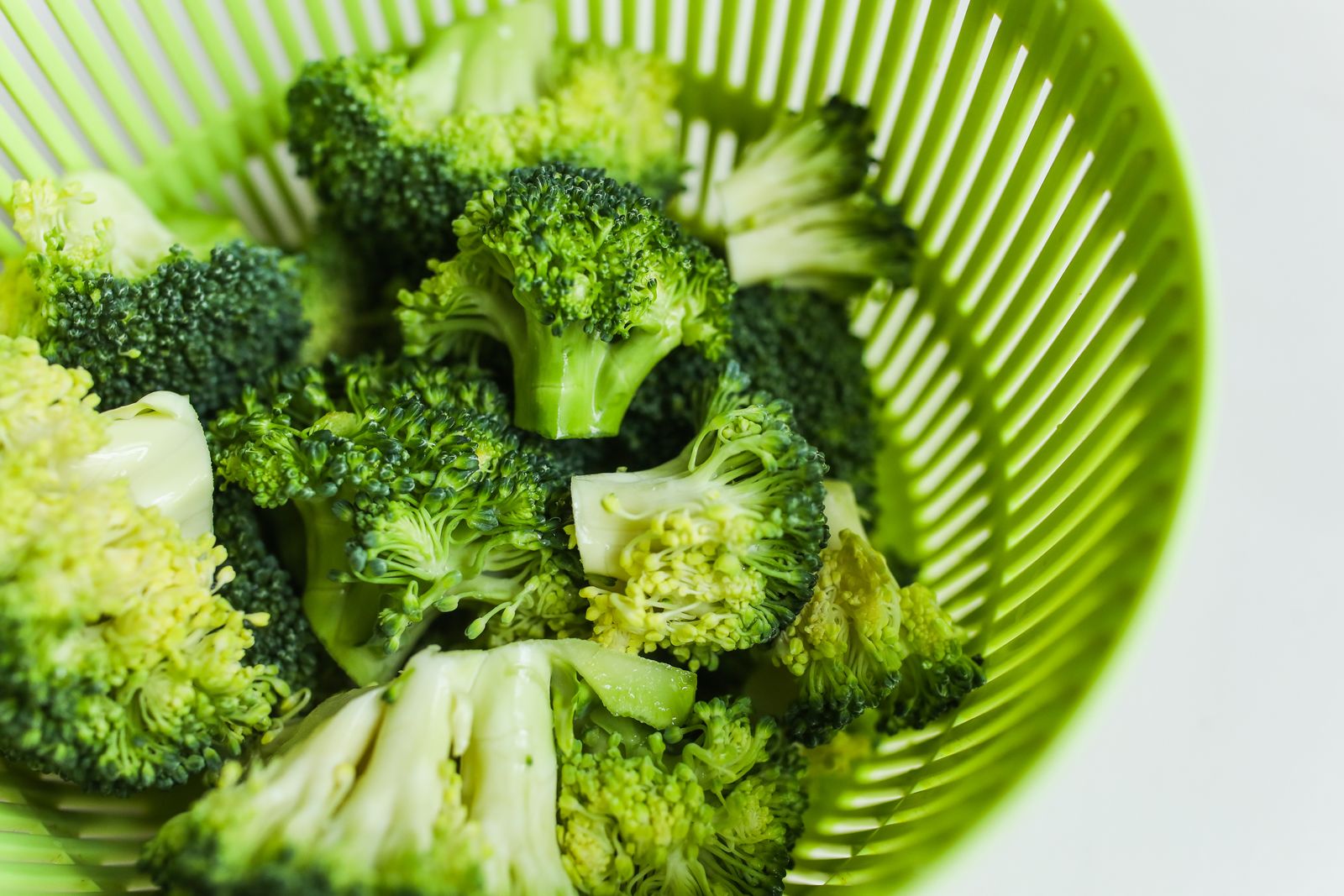
The useful task is reaching the crowded spaces in the head. A quick splash over the top leaves the undersides unchecked, while a long soak adds waiting time without replacing a final rinse.
Rinse the head, then check the smaller pieces
Start with clean hands, a clean colander, and a cutting board that has not been used for raw meat. Keep the broccoli above the sink basin rather than laying it on a surface that may have held dirty dishes.
- Inspect the broccoli and remove damaged areas. Discard produce that looks rotten.
- Hold the head under cool, running water. Rotate it so the stream reaches the crown, underside, and stalk.
- Use a clean knife and board to separate the florets for your recipe.
- Place the florets in a colander and turn them under the stream, checking between the branches for visible debris.
- Drain and dry with a clean towel or paper towel before preparing the dish.
The FDA recommends rinsing produce before cutting to reduce the transfer of surface dirt and bacteria by the knife. The second rinse gives you access to spaces that were harder to see while the head was intact.
Why a vinegar bath is not the default
University of Minnesota Extension recommends cool, running water and advises against leaving produce to soak. It notes that vinegar and baking soda can affect flavor. Neither belongs in a promise that a homemade wash will remove every contaminant.
Do not add dish soap, detergent, or bleach. The FDA’s produce-safety guidance says washing can reduce bacteria but cannot eliminate them. Clear rinse water is not proof that broccoli is free of pathogens or every pesticide residue.
If a floret still has visible debris, separate it enough to inspect and rinse the area again. Do not use a timer for a soaking solution as a substitute for looking at the part you are preparing.
Wash when you are ready to prepare it
Unless dirt is visible, Minnesota Extension recommends waiting to wash produce until preparation to help preserve quality. For a head of broccoli, wash the portion you plan to use rather than wetting the whole week’s supply in advance.
Bagged broccoli marked as pre-washed or ready-to-eat may be used without another wash, according to the FDA. Read the package instructions, and keep any ready-to-eat pieces away from utensils or boards used for raw meat. For dinner ideas after preparation, browse our dinner recipes.